
Start a Naperville Residents Search
The best first record depends on whether the starting point is a name, an address, or a year. For a current address, identify its county and open the matching assessor record. For a person, try name variations in the deed, court, license, and voter systems. For an earlier household, move to Naperville Public Library, Naper Settlement, Illinois Digital Archives, and census schedules. Naperville is not served by one master resident roll, and each source describes a different legal or civic relationship.
Property files generally identify owners rather than every occupant. Voter tools confirm only registered voters and withhold sensitive fields. A deed index names parties to a recorded instrument, not necessarily everyone who lived on the parcel. Printed city and telephone directories can include adults who never owned the place, but their year and street spelling must match the period being studied.
- Confirm whether the parcel lies in DuPage or Will County, using the city GIS and county parcel tools rather than the mailing ZIP alone.
- Search the correct assessor by owner name, billing name, PIN, or street address and record the parcel identifier.
- Check the appropriate recorder index for deeds, releases, liens, and name variants tied to that parcel.
- Use the state or county voter self-lookup when the search is authorized and the required identity fields are known.
- For past households, compare a directory year with census, newspaper, cemetery, probate, and map evidence.
- When a public record is not online, contact the counter, use the stated request form, or send a narrow Illinois FOIA request.
Naperville Residents Records Custodians
Naperville crosses DuPage and Will counties, so the correct custodian follows the parcel or event. The city describes 87th Street as the approximate dividing line: addresses north are generally on the DuPage side and those south are generally in Will. That rule is an orientation aid, not proof. Confirm the county in the parcel or election system before ordering a deed, certificate, or court file. The detailed address workflow appears in the Naperville street directory.
Naperville's Two-County Divide
A city address can say Naperville while its official records sit in Wheaton or Joliet. The county controls the recorder, assessor, clerk, trial court, voter office, and many vital records. The city itself controls municipal minutes, staff and commission rosters, permits, cemetery data, and its FOIA files. Six townships also cross Naperville, adding another geographic layer that does not follow ZIP boundaries.
Begin with the City of Naperville county and office guide. Then confirm the parcel in DuPage Property Records Search or the Will County Supervisor of Assessments portal. A wrong county search can look like a missing resident even when the record is public and available in the neighboring system.
Search Naperville Property Rolls
The two assessor systems offer different entry points. DuPage accepts PIN, address, billing name, map, and Board of Review searches. Will offers PIN, address, owner name, sale date and amount, subdivision, and property class. Both are useful for moving from a street to an assessed owner, but the situs address and tax-bill mailing address can differ. A company, trust, or estate may appear where a personal name was expected.
| Portal | Useful fields | Best result |
|---|---|---|
| DuPage Property Records Search | PIN, address, billing name, map | Parcel and assessment trail |
| Will Property Search | PIN, address, owner, sale, subdivision | Owner and sale context |
| Naperville Your Place | Address, parcel, owner, map layer | City districts and services |
Parcel: a mapped unit of land with a county identification number. Situs address: the location of the property, which may differ from the owner's mailing address. Roll: an official list created for a government function. Index: a finding aid that may not include the underlying document image.
Naperville Deeds Name the Parties
Recorder indexes connect names to instruments affecting land. DuPage's office index begins in 1839; its online name search generally reaches 1961 forward, PIN search 1985 forward, and address search 1995 forward. Will County's repository begins with records from 1836, while its online real-estate search generally covers 1965 forward and includes plats back to county inception. Older books and microfilm remain an office or archive task.
Search grantee names to find when a person acquired an interest and grantor names to follow a transfer out. Then inspect the legal description, PIN, recording date, and document type before concluding that two similar names refer to the same resident. Deeds show parties and title activity, not every person who occupied the property.
The City of Naperville contact and county guide pictured below identifies the public offices serving addresses on each side of the county line.
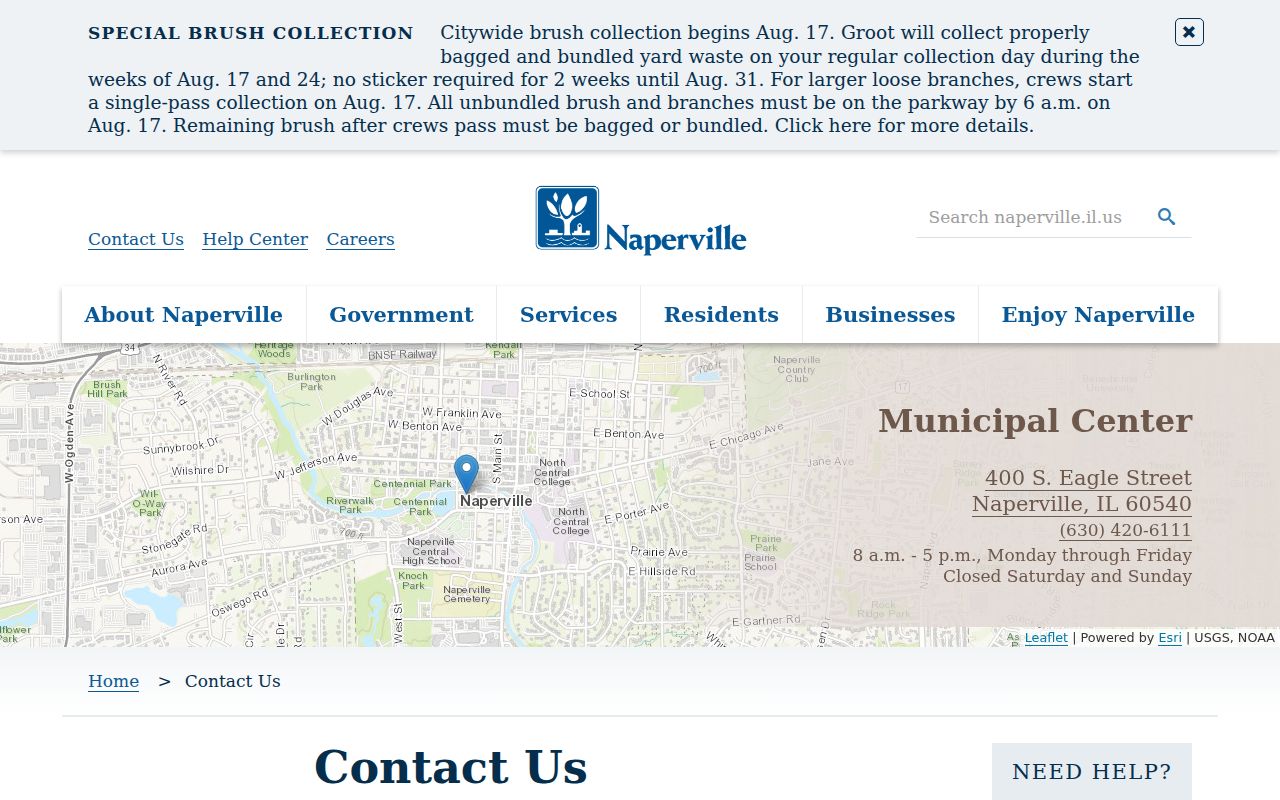
The city office map is a useful checkpoint before opening either county's recorder index.
Current Naperville Residents Directories
Present-day official sources are purpose-built lists rather than a complete household directory. Property rolls cover assessed owners. Voter self-lookups confirm registration and election geography when the required fields match. Recorder indexes identify parties to instruments. City rosters list public-facing officials, employees, board members, and commissioners. State license and business searches link names to regulated work or filed entities. Each source should be read only for what its keeper certifies.
| Official list | People represented | Custodian | How to reach it |
|---|---|---|---|
| Property assessment roll | Owners and billing parties | DuPage or Will assessor | Free online portal |
| Voter registration lookup | Matching registered voters | State or county election office | Identity-field lookup |
| Land-record index | Grantors, grantees, lien parties | County recorder | Online index and office books |
| City boards and staff | Public officials and appointees | City of Naperville | City pages and minutes |
| Professional licenses | Licensed people and entities | Illinois regulators | Free public lookup |
A name-only result needs another point of comparison. Middle initials, a parcel, a filing date, a license number, or a known county can separate two people with the same name. The Naperville resident lookup explains how to verify one person across these indexes without merging unrelated records.
Verify Naperville Voter Geography
Illinois offers a statewide registration lookup, while DuPage and Will maintain county tools. DuPage's search uses address and identity fields with selectors for the kind of voter information requested. Will's tool asks for first name, last name, date of birth, and house number. A successful match may confirm status and election geography, but it is not a public browse of every household.
Illinois election law withholds full dates of birth, Social Security and driver's-license information, phone numbers, email addresses, and protected address details. Commercial solicitation, intimidation, and related misuse are restricted. Treat a voter match as one civic record, not as permission to compile a personal profile.
Use records lawfully. Public access supports personal research and civic transparency. Never use a resident record to stalk, harass, intimidate, or harm anyone.
Naperville Court Name Checks
The county line also decides the trial-court portal. The DuPage 18th Judicial Circuit search provides case status, next court date, docket entries, and traffic updates for public matters. Its i2File advanced search uses location, person or business role, first and last name, optional middle name, case type, and sort controls. Public terminals at the Wheaton courthouse remain important when an online result lacks the needed file.
Will County's 12th Judicial Circuit offers a limited free lookup and warns that it is not the official court record. Full case information and images may require a courthouse terminal, the physical file, or an i2File copy order. Federal matters for both counties are in the Northern District of Illinois, Eastern Division, and PACER provides fee-based party and docket access. Sealed, juvenile, adoption, expunged, and other protected matters do not become public merely because a name was searched.
Naperville Vital Records Boundaries
Birth and death certificates are not open resident lists. DuPage or Will county offices handle local events, and Illinois Department of Public Health issues statewide birth and death copies to eligible applicants. County clerks supply certified marriage copies. IDPH marriage and dissolution verification begins in 1962, but verification is not a certified marriage certificate or divorce judgment.
Illinois genealogy access begins at least 75 years after a birth and more than 20 years after a death under the state route. DuPage also offers uncertified genealogy marriage copies for records at least 75 years old. A researcher who does not qualify for a certificate can use obituaries, cemetery interments, church material, probate, newspapers, and historical directories as lawful alternatives.
The Illinois vital-records overview shown here separates statewide services from county-certified records.
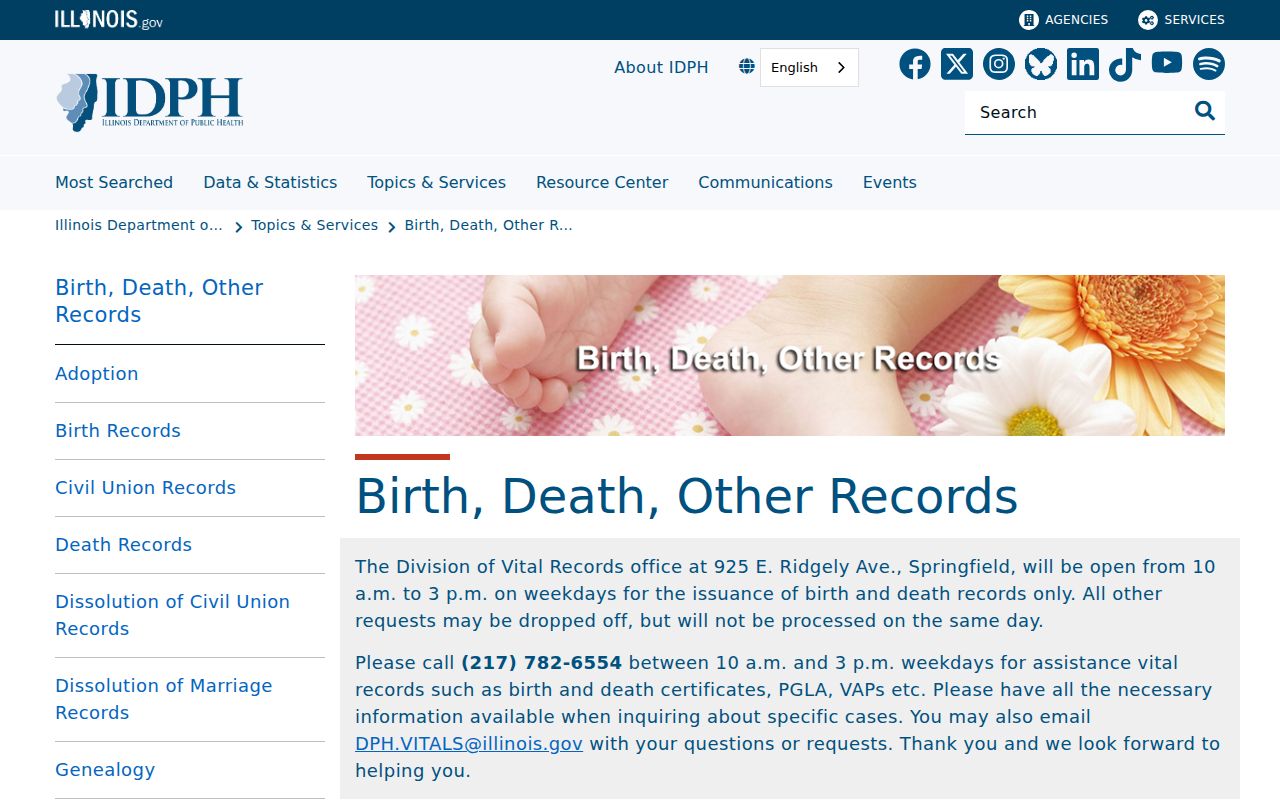
Eligibility, event county, and the type of copy determine the correct request path.
Naperville Licenses and Businesses
A public license or business filing can distinguish a resident from a same-name match. The Illinois Department of Financial and Professional Regulation accepts individual or entity searches by profession, name, license, and status. The State Board of Education offers educator credential status, and the Attorney Registration and Disciplinary Commission is the primary source for Illinois lawyer registration. Detailed discipline may require a separate public-records request.
The Illinois Secretary of State Business Entity Search supports business name, registered agent, president, secretary, manager, file number, keyword, and partial-word searches. Its result can connect a name to a legal entity, status, formation, agent, officers, and filing history. A registered-agent address or business office should not be assumed to be a home address.
Official Rolls Beat Resold Profiles
Official portals show the record as maintained for a defined public purpose. A county recorder can explain its index, a clerk can certify a copy, and an assessor can correct its roll. Commercial people-finding products may combine old addresses, phone data, and names from many sources without showing why a match was made. They can be useful as a lead, but they are not a substitute for a custodian's record.
Official public source
Known custodian, stated coverage, a correction channel, and a clear record type. Access may still require an office visit, fee, or eligibility proof.
Commercial compiled source
Broad aggregation and quick name matching, but uncertain update dates, mixed identities, and limited authority. Verify every useful lead at its original source.
Historical Naperville Residents Directories
Naperville Public Library's genealogy and local-history resources include digitized local material, newspapers, databases, and appointment help. Illinois Digital Archives hosts the Naperville collection, including telephone directories, minutes, local histories, and church material. An inspected 1932 directory demonstrates how a single volume can connect a surname, street, occupation, spouse, or business to one point in time.
Naper Settlement's Research Library adds family files, cemetery information, maps, newspapers, photographs, and government material. Reverse, or criss-cross, directories reorganize entries by street address rather than surname. Sanborn fire-insurance maps from 1892 and 1921 help resolve older building footprints and address context, while public federal census schedules currently extend through 1950 under the 72-year rule.
No single volume proves uninterrupted residence. Compare adjacent directory years, check spelling and street changes, then pair the household with a census page, deed, obituary, cemetery record, or newspaper notice. The full collection-by-collection method is covered in the historical Naperville city directory guide.
Naperville Records Beyond the Screen
Online coverage has firm edges. DuPage land books before the modern image run, Will archive material, full court files, restricted vital records, library microfilm, and Naper Settlement holdings may require a counter visit, appointment, mail request, or staff-assisted search. The Illinois State Archives and its regional depository system can lead to county, township, naturalization, probate, land, military, and state-census material, although the exact record group must be checked before a trip.
A narrow request gets a better answer than a demand for everything about a person. State the office, record type, approximate date, known name variants, address or case number, and preferred format. Illinois FOIA ordinarily gives a public body five business days for a non-commercial request, subject to a permitted extension. It does not override vital-record limits, court rules, sealed files, juvenile protections, or another confidentiality law.
Naperville's city FOIA route accepts online submissions, email, mail, fax, and in-person requests through the responsible department. Existing building permits, issued-permit reports, code records, council minutes, board rosters, and cemetery information may answer a local question without asking a county to create a new list. For land records, use the recorder's research desk; for a full court file, use the clerk's public terminal or copy process; for historical households, ask library or archive staff about the named collection and date range.
Keep a search log showing the spelling, county, portal, date, and result checked. Record a parcel number, document number, case number, or archive call detail as soon as it appears. Those identifiers make a phone, mail, or counter request precise and help prevent a later same-name result from being attached to the wrong Naperville household.